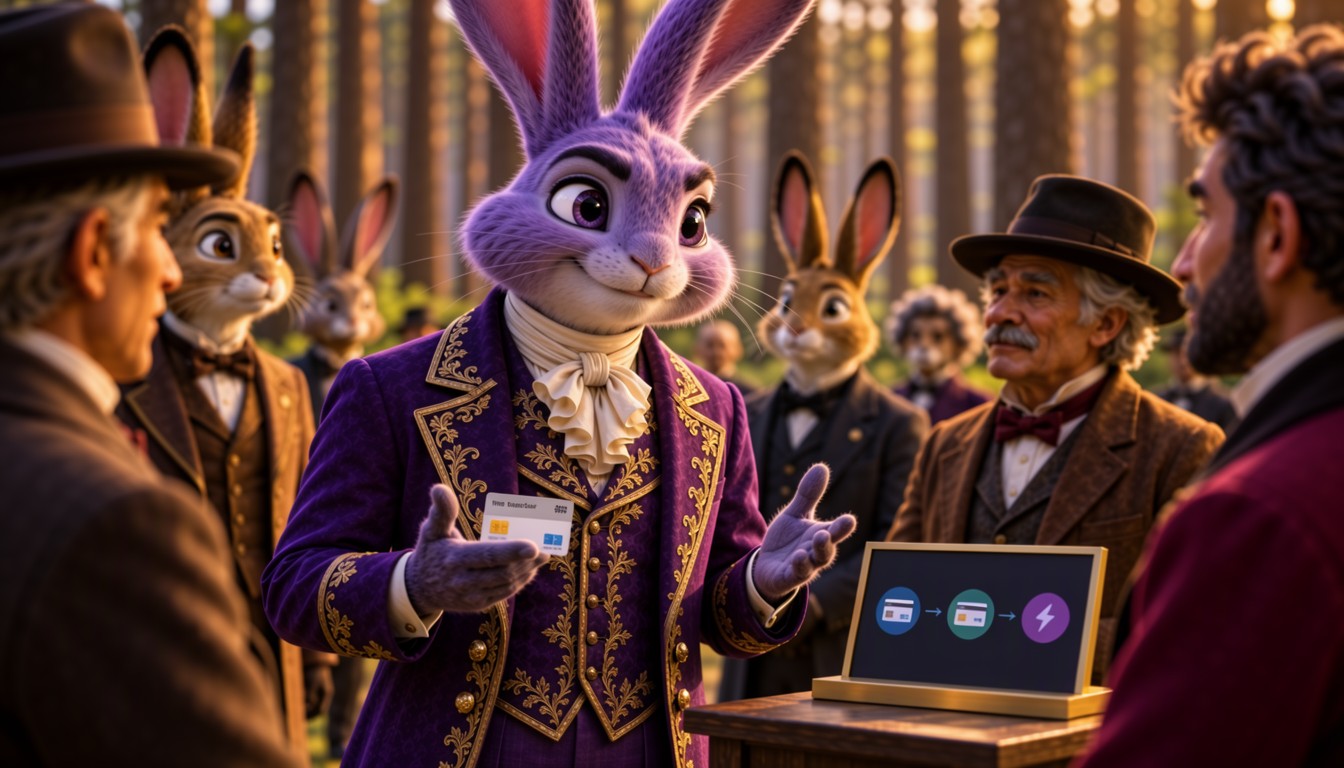
Purple Rabbit’s meeting filled the Carrotville town hall. Foxy brought a tray of carrot cakes. The squirrels arrived with acorn biscuits. Hedgehogs carried notebooks, and travelling rabbits squeezed into the back row. Professor Hoot sat beside the lectern, ready to ask the difficult questions.
Purple Rabbit began with a familiar object: one carrot. He explained that communities use money to exchange value, and different communities may use different currencies. That can make trade useful, but exchanging between currencies may involve rates, costs, and practical complications.
Then he described digital money. Some digital assets are managed through networks that record transactions in a shared ledger. A blockchain is one kind of ledger system, and cryptocurrency is one category of digital asset. Bitcoin is a well-known example, but systems differ. None of these terms, he cautioned, meant that value was guaranteed or that every transaction worked the same way.
He held up a small wallet-shaped prop. A wallet helps someone manage keys and interact with a network; the assets themselves are recorded according to that network’s rules. A public address can be used to receive assets, while private keys and recovery phrases must be kept secret. Losing control of them can have serious consequences, and trusting a custodian means relying on that provider to safeguard access.
Next came Purple Rabbit’s sketch of a card.
“My concept is called KryptoCard,” he said. “It imagines a way for people to connect supported digital assets with everyday payment experiences. Depending on how a real product were designed, conversion might happen during a transaction or through another arrangement. A card network, issuer, conversion service, and other partners could all be involved. The merchant needs to know what they will receive, when they will receive it, and what fees or rules apply.”
Foxy raised his paw. “So, when can I start accepting KryptoCard?”
Purple Rabbit smiled. “That is the next adventure.”
He was careful to explain that KryptoCard was a fictional brand and product concept, not an operating financial service. A real service would require suitable technology, business partners, security controls, customer support, transparent terms, and applicable regulatory approvals. A drawing could begin a conversation; it could not replace the work of building and responsibly operating a product.
Professor Hoot asked what might go wrong. Purple Rabbit listed price volatility, phishing, custody risks, failed payments, conversion costs, and unavailable systems. He told the audience to be wary of guaranteed returns and to research services before using them. The room grew quiet, then thoughtful.
“The lesson,” he said, “is not that digital money is magic. It is that a product can be useful only if the people behind it are honest, transparent, and careful.”
He looked out over the crowd and saw not fear, but curiosity. And for the first time, the forest did not look like a place that had to choose between carrots and crypto. It looked like a place that might learn to understand both.